/ae6fvdxeyi3j6jj6u0j3sebw8y73)
Content
Over 50 people attended our Community Forum: People Before Data Centres hosted at Clik Collective in West Footscray on Thursday 20th August. The event focused on the rapid expansion of data centres in Melbourne's western suburbs, particularly around Tottenham, West Footscray, Spotswood and nearby areas.
Residents, researchers, climate advocates, digital rights experts and built-environment specialists discussed the impacts of large-scale data centre developments, many of which are being driven by growing demand for AI computing.
The central theme was that data centres are no longer an invisible part of the internet. They have significant physical, environmental, energy and community impacts, and many participants argued that current planning and regulatory processes have not kept pace with the scale of these facilities.
5 Key Lessons
1. Data centres are major physical infrastructure projects
Speakers emphasised that modern AI-focused data centres consume enormous amounts of electricity, require extensive backup systems, and introduce industrial-scale infrastructure into residential areas. Residents described impacts including construction disruption, large power infrastructure, security fencing, noise and lighting pollution and generator testing.
"I genuinely couldn't believe that this is Australia and this is our complete lack of regulations around this type of infrastructure… We're the ones dealing with all the negative externalities and we're literally getting nothing for it." - Sean Brown, local resident living close by the Next DC data centre in West Footscray and Founder of Total Impact Assessments.
2. Communities feel excluded from decision-making
A recurring concern was the lack of transparency and meaningful consultation in planning approvals. Several panellists argued that communities often learn about projects late in the process and have limited ability to influence decisions once state-level approvals are involved.
"The law might not be on your side. But these are all political decisions. You're in an election year — so just don't shut up about it." - Joe Rafalowicz, Climate and Energy Campaigner with Greenpeace and co-author of Energy Vampires: The AI Data Centres Draining Australia
3. AI demand is driving the current boom
While data centres support many digital services, speakers argued that the recent surge in construction is largely linked to generative AI and hyperscale computing. This led to broader questions about whether the social and economic benefits of AI justify the infrastructure, energy and environmental costs being imposed on local communities.
“Do we actually need diesel generation? I know we need backup power for this facility, but
could it not be clean energy? Or is that the cheapest way of doing it so that it's cheap
for them, but the actual cost is borne by us?”
4. Environmental and energy impacts need stronger scrutiny
Discussion focused on electricity demand, diesel backup generators, water consumption, emissions and grid capacity. Several speakers called for stronger environmental assessment processes and better evidence about cumulative impacts before additional projects are approved.
"Locals like Sean have been doing the work that should be done by government — monitoring the air quality, doing the impact assessments, spending countless hours in their own time, because the information is simply not there." - Jess Marsh
5. Better regulation is needed before further expansion
A broad consensus among the panel was that governments need clearer rules, stronger oversight and more evidence-based planning. Many speakers supported a temporary moratorium on new approvals until appropriate regulations, impact assessments and community safeguards are in place.
"We need to move from reactive regulation to listening to people, to get things in place before we have a loss-of-life event or an explosion." - Gill Armstrong
Overall Takeaway
The forum was not anti-technology, but rather argued for a more democratic and transparent approach to digital infrastructure. The key message was that if data centres are to become a major part of Australia's future economy, communities should have a stronger voice in determining where they are built, how they operate, who benefits, and who bears the costs.
"Grassroots democracy is the antidote to this tiny coterie of billionaire bros who are trying to shape the world in their own image." - Lizzie O’Shea, Founder and Chair of Digital Rights Watch
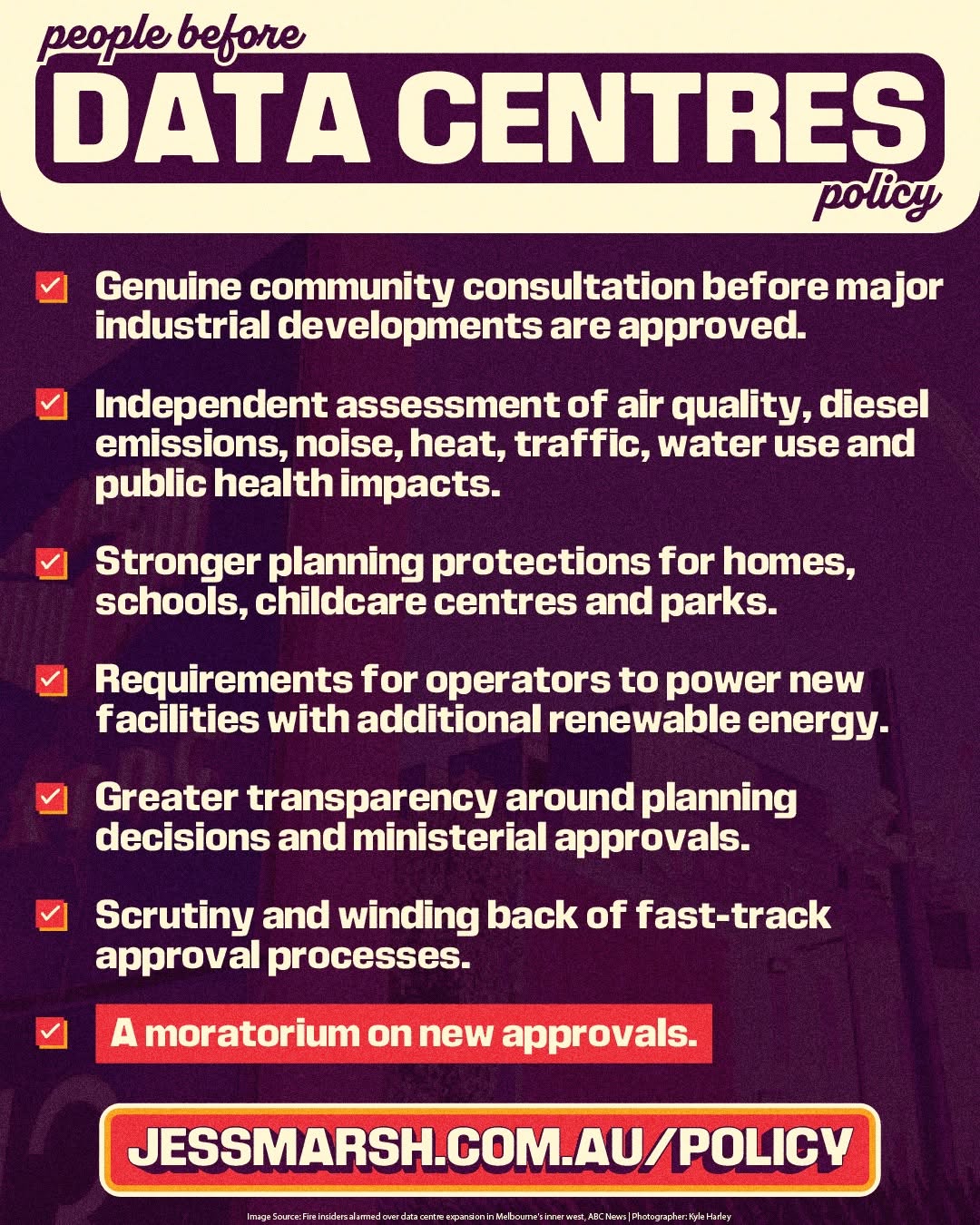
Jess’ policy on data centres is clear:
Technology should serve our community, not come at its expense.
Our community. Our health. Our say. Pause approvals. Assess the impacts. Listen to residents. Protect local neighbourhoods and the environment.
The question is not whether Victoria should have data centres. The question is whether the people who live next door deserve a genuine say before these decisions are made. I will fight to put people before data centres.
You can learn more about Jess’ policy priorities here.
Are you ready to help us win an independent voice for Footscray?
Here is how you can take action.
Join our WhatsApp Community to stay across the campaign, events and opportunities to support.
Come along to an upcoming event.